How to Arrest a Boat in Australia
A boat (ship), or its cargo or property, are the only ‘things’ that can be arrested under Australian law. Here we explain how to arrest a boat in Australia.
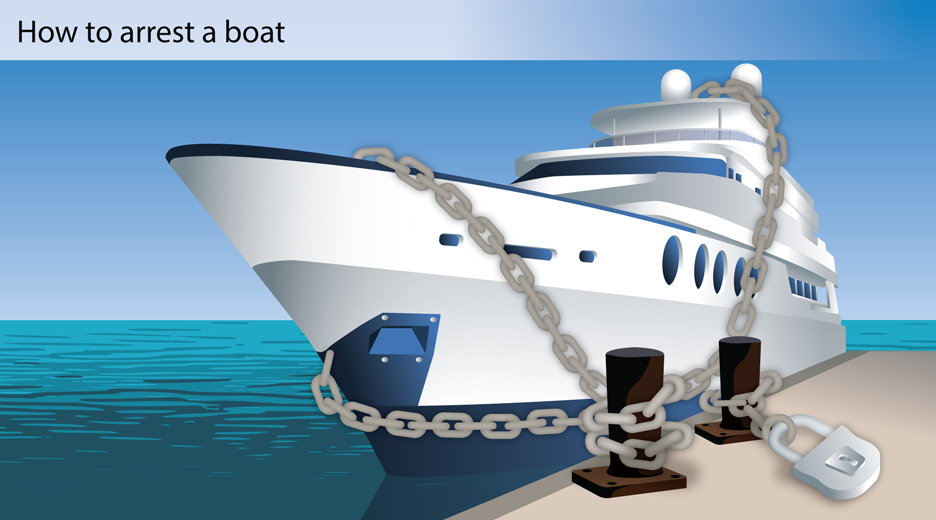
A boat (ship), or its cargo or property, are the only ‘things’ that can be arrested under Australian law. Here we explain how to arrest a boat in Australia through the Court system.
Table of contents:
- How to Arrest a Boat in Australia
- What Does "Arresting a Boat" Mean?
- When Is a Boat Arrest Possible?
- When Is Boat Arrest Typically Used?
- What Is the Procedure for Arresting a Boat in Australia?
- How Is a Boat Arrest Funded?
- What about Timing and Location of the Arrest?
- What Are the Consequences of Boat Arrest?
- Who Has Claim Priority Over the Boat?
- What is the Risk of Wrongful Arrest?
- What Happens to a Boat Arrest in the Case of Owner Insolvency?
- When Is Arrest Is (and When Isn’t It) Appropriate?
How to Arrest a Boat in Australia
When a commercial dispute involves a boat or its property, there is a special risk. The movability of a boat or ship means it can cross jurisdictions overnight, change flags, change names, and change hands at speed. This, coupled with the fact that boats are often of substantial financial value makes boat arrest an attractive procedure to many individuals.
In this guide, we look at the boat arrest procedure under the Admiralty Act 1988 (Cth) as a means of seizing and preserving boats and ships caught up in a dispute.
What Does “Arresting a Boat” Mean?
The arrest of a boat or ship is a court-ordered seizure and detention of a boat and/or it’s property. It is not a police action, or customs detention, but a private, civil action governed by the Admiralty Rules 1988 and their enabling legislation, the Admiralty Act 1988 (Cth). It is initiated via an application to the Federal Court of Australia, with a similar procedure available in other common law countries including New Zealand, Singapore, the United Kingdom and Canada.
Section 3 of the Admiralty Act 1988 (Cth) defines ‘Ship’ broadly to cover “a vessel of any kind used or constructed for use in navigation by water, however it is propelled or moved”. Therefore, throughout this guide, we use the terms ‘boat’ and ‘ship’ interchangeably. Section 3 also specifies that ship includes a barge, lighter or other floating vessel, a hovercraft, an offshore industry mobile unit, and a vessel that has sunk or is stranded and the remains of such a vessel. Notably, it does not include a seaplane, an inland waterways vessel, or a vessel under construction that has not been launched.
Note, the arrest proceeding can also relate specifically to the property on the boat or ship, such as its cargo.
An arrest places the boat in the custody of the court, meaning it cannot be sailed away, sold, or transferred without the Court’s permission, and until the underlying dispute is settled.
Boat arrest proceedings have an unusual legal form in that they are action in rem (Latin for “action against the thing”) rather than in personam, against a named defendant. This has benefits over other mechanisms for preserving assets, such as a freezing order (formerly known as a Mareva injunction) under Rule 25A(2) of the Federal Court Rules. We consider a few of the main benefits below.
First, the way in which the arrest is executed (a Marshal physically boarding the vessel and taking it into their custody) helps prevent the boat being moved before the dispute is resolved. By contrast, a freezing order would only attach serious consequences (contempt of court) to those who moved a boat, it wouldn’t actually bring the boat into the custody of the Court or its agents.
Second, the arrest of the boat brings into operation special priority rules for asset distribution that only apply in Admiralty law (these rules are discussed in detail below in this guide). This will often put the plaintiff ahead of other creditors in the case of insolvency.
Third, the arrest might induce the defendant to offer alternate security to try and get their boat back. Under Rules 51 and 52, the defendant can apply to either the Registrar or the Court to have a boat released, which can be achieved by offering a bail bond (two sureties guaranteeing payment) or where the plaintiff otherwise consents to the alternate security.
Fourth, a freezing order is extraordinary relief, at the discretion of the court. It is awarded only where the applicant has a “good arguable case”, and where the applicant can prove that there is a danger that, without such an order, the assets will be dissipated. There are no such requirements for an arrest warrant (though the defendant can always apply for the underlying action to be struck out via summary judgement).
Fifth, the applicant needs to make an undertaking as to damages. While an arrest warrant requires the plaintiff to make an undertaking (and pay a deposit) in relation to the Marshal’s costs, it does not require an undertaking as to the defendant’s potential damages.
For more information, see the Civil Trials Benchbook, 2-4100 Freezing orders.
When Is a Boat Arrest Possible?
Boat arrest is part of Admiralty law, which is the law in Australia relating to maritime disputes. The Admiralty Act 1988 (Cth) (the Act) and associated Rules set down the procedures and requirements for both ‘general’ and ‘proprietary’ maritime claims.
It is in Part III of the Act that it is outlined when proceedings in rem (i.e., the proceedings underlying a boat arrest) can be conducted. Such a proceeding can be brought when the underlying claim concerns:
- a maritime lien or other charge, which includes a lien for salvage, damage done by a ship, wages of the master, or of a member of the crew, of a ship; or master’s disbursements (s15)
- a proprietary maritime claim (s16).
- a general maritime claim with respect to the owner’s or demise charterer’s liabilities (ss 17-18).
Section 2, in turn defines this second category, ‘proprietary maritime claim’ so as to include claims relating to:
- possession of the boat
- title or ownership of a boat or a share in it
- a mortgage of a boat or a share in a boat, a mortgage of the vessel’s freight.
- co-owner over disputes possession, ownership, operations or earnings of the ship
- enforcement of a judgment against a boat or other property in a proceeding in rem.
The breadth of this category means claims can be brought in a range of cases including claims in conversion, detinue, or bailment where goods or the vessel itself are wrongfully held or dealt with, and trust-based claims, including where an individual has knowingly assisted or received goods in breach of trust (this potential head of recovery under the cause of action in Barnes v Addy is discussed in detail in our case study of the Merlion).
Boat arrest can be an especially important mechanism during insolvency. Where a company that owns or operates a vessel is insolvent or approaching insolvency, arrest prevents the dissipation, relocation, or clandestine sale of the asset before a Voluntary Administrator, Liquidator or creditor can act.
For reasons of completeness, it is worth mentioning that aside from boat arrest or freezing orders, there is also the possibility of enforcement under the Personal Property Securities Act 2009 (Cth) for secured creditors with a perfected security interest. Note, once a boat is under arrest, PPSA enforcement is no longer possible. Nevertheless, it is still possible (and prudent) where you consider yourself to own a boat to register that interest on the PPSR, thereby giving notice to any potential purchaser of your interest (and therefore scuppering a quick sale).
When Is Boat Arrest Typically Used?
Not every maritime dispute requires an application for an arrest warrant. Some occasions where a boat arrest warrant can be especially useful include:
- Where there are high-value mobile assets at risk of removal or sale. Boats are often of significant monetary value and the ease of moving them puts them at significant risk in case of dispute.
- Where the boat is one of the few available assets. Whoever formally owns or possesses the boat may have no other substantial property in Australia, no local bank accounts, and no assets against which a judgment could realistically be enforced. Arresting the vessel secures the only meaningful avenue for recovery.
- Insolvency appointments. A liquidator or voluntary administrator appointed over a company with maritime assets should consider vessel arrest as part of their initial asset preservation strategy. Where there is a risk that related parties or creditors will act to remove or encumber the vessel before the insolvency process can take hold, arrest provides a court-backed mechanism for preservation.
- Unpaid crew wages and maritime liens. Crew members who have not been paid may be entitled to a maritime lien, a claim that attaches to the vessel itself and survives changes of ownership.
There is also a provision in the Act for ‘Surrogate Ship’ (also known as ‘Sister Ship’) arrest.Under section 19 of the Act, it is possible to arrest related boats that are not themselves the subject of dispute. This section provides that a proceeding in rem on a general maritime claim can be commenced in rem against some other ship if:
- a relevant person in relation to the claim was, when the cause of action arose, the owner or charterer of, or in possession or control of, the first – mentioned ship; and
- that person is, when the proceeding is commenced, the owner of the second – mentioned ship.
This closes a potential loophole when dealing with a fleet of ships, where a fleet operator might simply rotate vessels in and out of Australian ports to defeat a claimant’s arrest strategy.
What Is the Procedure for Arresting a Boat in Australia?
For applicants ready to arrest a boat, there is a certain procedure that must be followed. We set out the core steps below, as described by Deputy Registrar Tony Tesoriero in ‘Practical Issues in Admiralty Arrests’.
Commence an action in rem
The action can be commenced by filing a writ in rem in the relevant Federal Court District Registry. The writ names the vessel as the defendant and sets out the particulars of the boat, the particulars of the claim, and the claimed relief (such as damages or an injunction). For the writ in rem to be valid, the cause of action must fall within one of the categories permitted under the Act (such as a maritime lien or a proprietary maritime claim, see prior section of this Guide). The writ should also name any ‘relevant person’ to be joined as first defendant: Usually, this will be the person accused of wrongdoing.
Alongside the writ, the plaintiff needs to make an application for an arrest warrant (under Form 12) and provide a draft of the arrest warrant itself. The application needs to include an undertaking to the Court to pay the Marshal for their costs, on demand, including all costs while the property is under arrest (Admiralty Rules 1988 (Cth), r41).
Provision of evidence required to support arrest
Arrest cannot be obtained on bare assertion: The applicant must file an affidavit(s) in support, establishing the factual basis for the claim, identifying the vessel with sufficient precision (including its name, port of registration, and current location), and providing information about the circumstances that make arrest necessary. Note, if the arrest is later found to have been obtained “unreasonably and without good cause”, the applicant may face a damages claim under section 34 of the Act for Wrongful Arrest (more on this below).
The accompanying affidavit should include a statement to the effect that the Register of Caveats against arrest has been searched, and no such caveat is in force.
If any prior proceedings in the current jurisdiction, or another one, have been stayed due to payment being made or security in the form of a bail bond, a statement to this effect needs to be included in the affidavit.
Finally, under rule 39A of the Admiralty Rules 1988 (Cth) there is a duty of disclosure with respect to any matter that may affect the safety of the Marshal or any other person. Any such matters must be disclosed to the Marshal as soon as the individual becomes aware of it, which may mean including a statement to this effect in the affidavit.
Issuance of the arrest warrant
Once the application and supporting affidavit are accepted, a Registrar issues the arrest warrant. The warrant is then executed by a Marshal of the Federal Court, an officer specifically appointed for this purpose under rule 43 of the Admiralty Rules. The arrest warrant is valid for six months from the date of issue. If the warrant is not executed within that period, it lapses.
Execution of the warrant
This involves the Marshal physically approaching the vessel, boarding it, and affixing sealed copies of the relevant court documents the arrest warrant, and the supporting affidavit to the mast or another conspicuous part of the vessel. From that point, the vessel is in the custody of the Federal Court. Either before, or at the same time, the initiating process, the writ, must be served. In practice, they usually occur at the same time. While the writ can be served by anyone, in practice it is usually served by the Marshal as well.
Once the warrant is executed, the Marshal must take appropriate steps to retain safe custody of and preserve the ship. From that point, anyone who attempts to move the boat contrary to that warrant will be in contempt of court. Where appropriate (such as the case of a working cargo ship), the Marshal will usually appoint the Master as Shipkeeper, with an undertaking that the ship won’t be moved and will act on the direction of the Marshal.
How Is a Boat Arrest Funded?
As mentioned, the plaintiff or their solicitor must make an undertaking to pay the costs of the Marshal before a warrant will be issued. It is also common for the Court or the Marshal to demand a deposit be made in advance for this purpose. The amount will be based on an estimate of the anticipated costs which could include travel expenses, launch hire/helicopter hire and insurance premium, costs of ship fuel, food and water for crew, etc. It will also include a portion for the Marshal’s salary/fees.
As the Marshal is usually not covered by the shipowner’s or charterer’s insurance, they will need to obtain indemnity insurance for the period while in custody. This cost will also be borne by the plaintiff.
The Principal Registry of the Federal Court of Australia keeps a ‘Marshals Account’ where payments to the Marshal will be deposited by the plaintiff or their solicitor under a designated project code.
What about Timing and Location of the Arrest?
Timing and geography are important considerations for any boat arrest:
- Jurisdiction requires physical presence. The boat must be within Australian territorial waters at the time the warrant is executed. A vessel that has already departed Australian waters cannot be arrested under Australian law, regardless of how meritorious the underlying claim may be. Note also, the requirement that the boat not be one used primarily for inland waterways (section 3 of the Act).
- The boat may not be easily accessible. Where the boat is in a berth or mooring the Marshal may be able to confidentially confer with those in custody of the boat about access in order to not ‘tip off’ relevant parties prior to arrest. But the boat may also only be accessible via private property (e.g., on a private jetty), which can make matters more difficult. As mentioned above, any perceived risk to the Marshal’s health and safety in executing the warrant needs to be communicated as soon as becoming aware of it. In many cases, Police accompaniment will be requested for the Marshal.
- The window of action can close quickly. It takes time for lawyers to gather evidence, draft an affidavit, file documents, obtain a warrant, and arrange for the Marshal to attend. So, it is important for potential applicants to get legal advice as early as possible.
- Arrests at sea are possible. In some circumstances, it is possible to arrest a vessel while it is still within Australian territorial waters but not yet in port. The Marshal can be transported to the vessel by helicopter or launch, though this raises significant additional safety and logistical considerations and substantially increases cost.
What Are the Consequences of Boat Arrest?
Once within the Marshal’s, and therefore the Federal Court’s, custody, the boat stays there until the Court makes an order for the vessel’s release or sale, or until the underlying proceedings are resolved.
The range of outcomes following arrest include:
- Negotiated settlement. Many arrests are resolved by agreement between the parties, with the boat released against security and the dispute settled on commercial terms. The arrest may create significant commercial pressure on the owner (i.e. the boat can’t be used for any commercial activities while under arrest which tends to encourage resolution).
- Court determination of ownership or liability. Where the parties cannot agree, the underlying proceedings continue before the Federal Court. The Court will determine the substantive claim and make orders accordingly.
- Judicial sale. If the vessel remains under arrest for a prolonged period without resolution, for example, because the owner is insolvent, the vessel has been abandoned, or no security has been offered, the Court may order the judicial sale of the vessel. The proceeds of sale are paid into Court and distributed to claimants in order of priority under Admiralty law (see below).
Who Has Claim Priority Over the Boat?
Arresting a boat, and succeeding in the underlying cause of action, will not necessarily give the applicant priority to take possession of the boat or receive the proceeds of the sale of the boat. Admiralty law has its own hierarchy for priority.
- First priority goes to the Marshal’s costs and expenses. This includes port fees, crew provisions, maintenance, insurance, and the Marshal’s own fees.
- Second priority goes to the plaintiff’s costs. This includes the vessel’s arrest and sale costs.
- Third, priority goes to the holder of a maritime lien. A maritime lien is a right that attaches to the vessel itself at the moment the circumstances giving rise to it occur. It does not depend on possession. It does not require registration, and it survives changes of ownership.
The categories of claim that attract a maritime lien under Australian admiralty law include damage done by a ship (such as collision or allision claims), salvage, crew wages, the master’s wages and disbursements, and bottomry and respondentia. Of these, crew wage claims are among the most practically common, reflecting the vulnerability of seafarers.
In fourth priority are holders of possessory liens. This entitles an individual to possession until payment due is made. For example, a boat repairer may keep hold of a boat and hold a possessory lien over it until paid in full. Read more in James McGeorge ‘Grappling with The Nettle’: Common Law Possessory Liens in Admiralty Law’.
Next are registered ship mortgages. A mortgage registered over a vessel under the Shipping Registration Act 1981 (Cth) gives the mortgagee a strong priority claim against the proceeds of a judicial sale, but ranks after maritime and possessory liens, even those that arose after the mortgage was registered.
Below ship mortgages rank statutory rights of action in rem, that is, the claims brought by parties who have no maritime lien, but whose cause of action is nonetheless within the admiralty jurisdiction of the Federal Court. Cargo damage claims, unpaid freight claims, and many charterparty claims fall into this category.
Finally, in personam claims have last priority.
What does this mean in practice? Any commercial creditor or external administrator thinking about an arrest warrant needs to thoroughly investigate the vessel’s existing encumbrances. A ship that appears valuable on paper may, in a judicial sale, yield little or nothing for a statutory claimant once prior ranking claims are satisfied.
What is the Risk of Wrongful Arrest?
The right to arrest a boat is powerful: Unlike an in personam proceeding for a freezing or preservation order, the plaintiff does not have to show their case has substantive merit. Out of fairness to defendants, they have long had a potential counter claim in Admiralty law for damages for Wrongful Arrest. Section 34(1) of the Act provides under the heading “Damages for unjustified arrest etc” that in relation to proceedings under the act, any party that “unreasonably and without good cause” demands excessive security or arrests a ship or other property, they are liable for damages for losses suffered. This section also provides that they are similarly liable if, in the same way, they refuse to give consent to the ship being released from arrest.
The threshold for damages in this claim, “unreasonably and without good cause” is meaningfully lower than it was historically in Australia and still is in many other jurisdictions under a test established in the Privy Council decision of the Evangelismos (1858). Under that test, a shipowner seeking damages for wrongful arrest must demonstrate either mala fides (actual bad faith) or crassa negligentia (gross negligence).
Australia departed from this position deliberately. Prior to the introduction of the Act, the Australian Law Reform Commission identified the power imbalance created by the Evangelismos test and sought a more defendant-friendly test that doesn’t require something approaching malice.
What “unreasonably and without good cause” means in practice has not been authoritatively resolved. However, as surveyed by Michael Woodford in Damages for Wrongful Arrest: section 34, Admiralty Act 1988, obiter guidance from cases like The Carina and McConaghy v The Yacht “Ragamuffin” suggest the test involves an objective assessment of the evidence available to the arresting party at the time of the arrest. If it was objectively unreasonable to proceed in rem on that evidence, the claim may succeed.
Any individual considering that there is a risk of wrongful arrest can also try and prevent such an action by lodging a caveat against arrest in the Federal Court registry. The procedure permits a party to file a caveat undertaking that, if an action in rem is commenced, they will enter an appearance and provide security up to a specified amount. Once entered, the caveat is recorded on the Admiralty register and must be searched before any arrest warrant is issued.
What Happens to a Boat Arrest in the Case of Owner Insolvency?
For creditors without a perfected security interest, arrest can be especially attractive in an insolvency situation: An unsecured creditor facing a shipowner (or purported shipowner) in Voluntary Administration or Liquidation will join a queue of unsecured creditors and may recover very little. Arrest converts that unsecured position into court-controlled security over a tangible, mobile asset. Even preferential creditors in insolvency (like employees) might seek a boat arrest as if they hold a maritime lien (as they may do for ‘seafarers wages’), they will have priority over even registered ship mortgagees.
However, when a boat owner enters voluntary administration or liquidation, the insolvency regime immediately complicates any arrest that is already on foot, or that a creditor is contemplating. Under Part 5.3A of the Corporations Act 2001 (Cth), the appointment of a voluntary administrator triggers an automatic stay of proceedings against the company and, critically, against its property. Sections 440D and 440F impose a moratorium on both the continuation of proceedings and enforcement processes, meaning that a creditor who has already arrested a vessel may find they need leave of the court to do anything further with it.
In liquidation, s 471B imposes a comparable stay, though s 471C preserves the rights of secured creditors to enforce their security. The question whether an arrest or a court-ordered sale of the boat constitutes “execution” caught by the stay, or something more analogous to secured creditor enforcement is crucial. In Morris v The Ship “Kiama” [1998] FCA 256, the Federal Court treated arrest and judicial sale as conceptually distinct from ordinary post-judgment execution, reasoning that arrest functions to obtain security over the property rather than to enforce a judgment debt. On this basis, the courts have been prepared to grant limited leave allowing admiralty proceedings to continue in a controlled way alongside the insolvency administration, rather than subsuming the vessel entirely into the collective process.
Boat arrest is a relevant remedy for liquidators and voluntary administrators, as well as creditors. An external administrator with a claim against a third-party vessel, for example, where the insolvent company is a cargo owner with a claim in tort or contract against a carrier, can commence in rem proceedings like any other plaintiff. Though, as discussed by the Federal Court of Australia in Yu v STX Pan Ocean [2013] FCA 680, the external administrator will have to weigh up any benefits of arrest with the substantial costs that might be incurred in doing so.
Where a cross-border insolvency is involved, the Cross-Border Insolvency Act 2008 (Cth) applies, which gives force to the UNCITRAL Model Law. In Yu, Buchanan J accepted that recognition of a foreign main proceeding does not automatically extinguish arrest rights in Australia. Instead, applications to arrest must be made to a judge with full disclosure of the recognition proceedings, and the court conducts a proportionality assessment, including whether local creditors’ interests are adequately protected.
When Is Arrest Is (and When Isn’t It) Appropriate?
Boat arrest is a powerful and effective asset preservation tool. However, given the discussion earlier, there are two major considerations that need to be considered before choosing boat arrest over another remedy: First, the requirement to underwrite the Marshal’s costs can make it a very expensive remedy. Second, the plaintiff becomes liable for potential damages for Wrongful Arrest, if the arrest is later found to be unjustified.
In light of this, boat arrest might be most appropriate (and worth the risk) where:
- The boat is genuinely at risk of leaving Australian jurisdiction in the short term, whether through departure or sale
- The boat is at imminent risk of being concealed or sold
- The boat represents the primary or only meaningful asset available for recovery
- The commercial value of the arrested vessel is proportionate to the cost and disruption that arrest will cause
In all cases, the underlying claim should be well-founded, properly documented, and clearly within admiralty jurisdiction.
It should also be borne in mind that small vessels, fishing boats, yachts, recreational craft, present their own particular challenges. Issues of access (vessels on private property or in marinas), resistance from owners or crew, questions about crew property, perishable cargo such as fish, and the logistical difficulty of securing a small vessel can all complicate matters significantly. The Federal Court’s Marshal’s Manual provides specific guidance on small vessel arrests, and legal advice tailored to these scenarios is important.
The single most important thing someone can do if they are considering boat arrest, or if they suspect a boat, they have an interest in may be at risk, is to seek specialist admiralty legal advice immediately. Because the window for arrest can close with very little warning, preparation in advance of the need to act is always preferable to scrambling once the vessel is already underway.
If you are dealing with a dispute that involves a boat, whether as a creditor, a cargo interest, an insolvency practitioner, or a party to a charterparty or other maritime contract, get in touch with firm.
With expertise in both insolvency and admiralty law, we are especially well-positioned to advise you on these matters.