Ben Sewell

How are pre-insolvency advisers regulated in Australia?

How are pre-insolvency advisers regulated in Australia?

Estimated reading time: 8 minutes

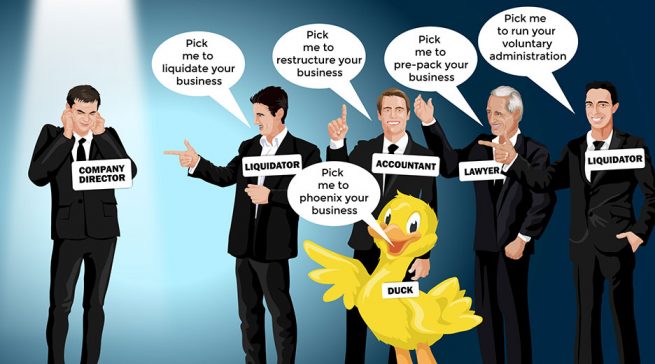
While insolvency in Australia is a heavily regulated industry, historically, there is one segment of the industry that has had little oversight: pre-insolvency advisers. Arguably, this has been a detriment to the broader industry as the highly trained professionals in…

Can the liquidator ask company directors about their personal assets?? In short, yes.

Liquidator’s examinations – can the liquidator ask company directors about their personal assets?

Estimated reading time: 5 minutes

The winding-up of a company is a daunting experience for a director. They know that their previous actions are under close scrutiny. But does that scrutiny include their personal assets? In short, yes. But liquidators need to tread carefully. In this article, we look into liquidators using the examination power to inquire into a director’s personal assets.

What are the duties of insolvency practitioners in Australia?

What are the duties of insolvency practitioners in Australia?

Estimated reading time: 8 minutes

Corporate insolvency practitioners are important gatekeepers in the economy. In Australia, there is a paradox that the system is designed to try to stop the insolvency practitioner from giving meaningful pre-insolvency advice to insolvent businesses. This is a pity because insolvency practitioners are well-placed to give pre-insolvency advice. 

How Can a Liquidator Recover Unfair Loans?

How Can a Liquidator Recover ‘Unfair Loans’?

Estimated reading time: 6 minutes

An important task for a liquidator, once appointed, is to see whether there are any transactions of the company that are ‘voidable’, and can be clawed back for the purposes of distribution to creditors.

Liquidator fraud recovery using Barnes v Addy

Liquidator fraud recovery using Barnes v Addy 

Estimated reading time: 6 minutes

If a liquidator is appointed to an insolvent company, and believes assets have been depleted due to fraud, what can they do? Even if the crime of fraud can be proven, this does not necessarily aid the liquidator in recovering assets. Here we look at the option for liquidators to use the concepts of ‘knowing receipt’ and ‘knowing assistance’ established in the 19th century English case of Barnes v Addy to recover from third parties in cases of fraud. It is a difficult claim to defend because it is vague and open to broad interpretation when a director fails to keep adequate books and records before winding up.

‘Retention of Title' Claims during liquidation

Can a Liquidator Ignore ‘Retention of Title’ Claims and Keep Inventory when a Business is put into Liquidation?

Estimated reading time: 6 minutes

Many businesses supply goods to other businesses on credit. In many cases, this inventory is covered by a so-called ‘Retention of Title’ clause in favour of the supplier. Here we assess the consequences of liquidation on a Retention of Title claim, the impact of the Personal Properties Securities Act 2009 (Cth) and whether a liquidator might ever be permitted to ignore such a claim (the answer, generally speaking, is no – they cannot ignore it).

Are Directors' Salaries ‘Voidable Transactions’ in a Winding Up?

Are Directors’ Salaries ‘Voidable Transactions’ in a Winding Up?

Estimated reading time: 5 minutes

Directors often fail to pay themselves a salary before winding up. Instead, many small and medium-sized enterprise (SME) directors pay themselves throughout the lifetime of a company by withdrawing cash that is accounted for in a company loan account. In doing so, directors often seek to delay the payment of the income tax (PAYG) that they would have to pay if they drew a salary.

Who should be the architect of a turnaround?

Who should be the architect of a turnaround?

Estimated reading time: 7 minutes

Small-to-medium sized business owners can’t effectively outsource the responsibility for driving a turnaround process when their business is in financial trouble. They can hire sensible staff and competent professional advisors but they are the only people with the incentive (skin in the game) and experience (because they started the business) to drive forward a turnaround process.